In export garment manufacturing, fabric quality often gets the most attention. However, one of the most common causes of production issues, rework, and even buyer rejections comes from something much smaller — the sewing thread.
Choosing the right sewing thread is not just about matching color or price. It directly affects seam strength, garment appearance, wash performance, and overall production efficiency. For export garment manufacturers supplying international brands, the right thread choice becomes even more critical due to strict quality and compliance requirements
Below are key factors manufacturers should consider when selecting sewing threads for export
garments:
Match The Thread to The Fabric and Application
Different garments and fabrics place different demands on sewing threads.
For example:
- Lightweight woven shirts require smooth, fine threads that create neat seams without puckering.
- Denim garments need higher tensile strength and abrasion resistance.
- Knitwear demands threads with flexibility to handle stretch without seam breakage.
A single “standard” thread rarely performs well across all applications. Thread selection should always be based on the end use, stitch type, and fabric construction.
Strength Alone Is Not Enough
Many manufacturers focus only on thread strength, assuming higher strength automatically means better performance. In reality, excessive strength can cause:
- Fabric damage
- Needle heating
- Poor seam appearance
The ideal sewing thread balances: - Tensile strength
- Elongation
- Softness
- Surface smoothness
This balance ensures durability while maintaining a clean finish on the garment.
Dye Quality and Color Consistency Matter
For export orders, color consistency across production batches is critical. Variations in thread shade can become visible after washing or finishing, leading to quality complaints.
Well-dyed sewing threads for export garments should offer:
- High color fastness to washing and rubbing
- Batch-to-batch shade consistency
- Stability under different finishing processes
This is especially important for repeat orders and long production runs.
Machine Compatibility and Production Speed
Thread performance directly affects machine efficiency. Poor-quality threads can cause:
- Frequent thread breaks
- Lint buildup
- Needle damage
- Production downtime
Threads should be compatible with: - High-speed sewing machines
- Different needle types
- Continuous production environments
Consistent thread quality helps maintain smooth operations and reduces costly interruptions on the factory floor.
Compliance and Buyer Requirements
Exporters supplying international brands must meet various compliance standards. Sewing threads
used in garments often need to comply with:
- Restricted substance regulations
- Child safety requirements
- Sustainability or recycled content standards
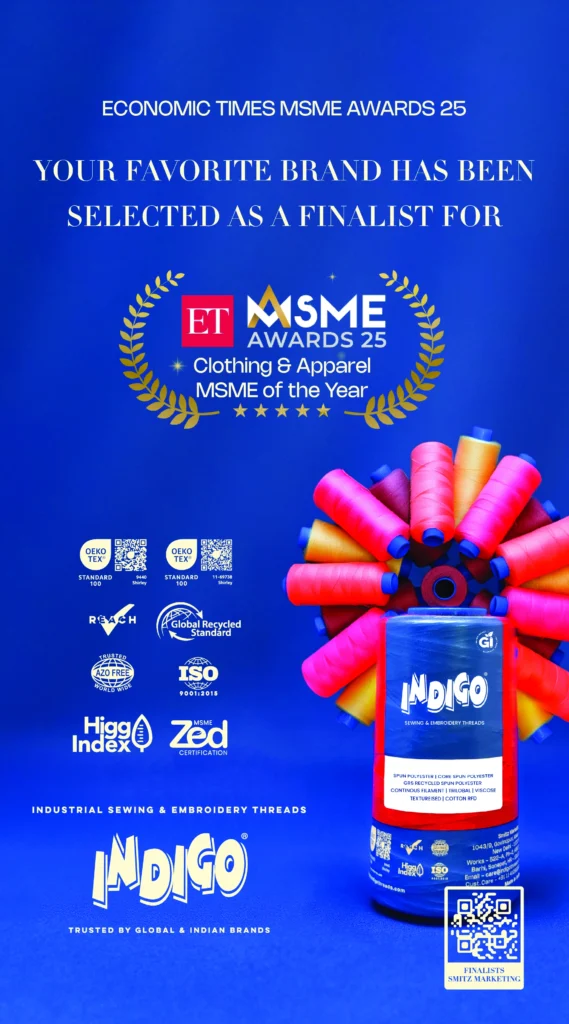
Working with a supplier that understands and maintains these certifications simplifies buyer approvals and audits.
Conclusion
Sewing thread is a small component, but it plays a major role in garment quality and production efficiency. From our experience working with export garment manufacturers, many avoidable production issues can be traced back to incorrect thread selection rather than fabric defects.
At Indigo Threads, we work closely with manufacturers to recommend thread solutions tailored to specific applications, fabrics, and production requirements — ensuring reliable performance from sampling to bulk production.